 French
  English
  Spanish
  German
  Russian
  Vietnamese
  Italian
  Portuguese
  Romanian
  Japanese
  Korean
 How Barcode Marked Playing Cards Work: A Technical Guide for Players

Barcode marked playing cards represent the technological frontier of poker cheating equipment. Unlike traditional luminous-ink marked cards that require infrared lenses or glasses to read, barcode-marked cards are designed to work with electronic scanner systems — poker analyzer phones, disguised scanner cameras, and table-mounted readers — that process information faster and more accurately than human vision ever could.
This technical guide explains exactly how barcode marked cards are manufactured, how the barcode encoding system works, which card brands can be processed, and how to integrate them with your poker analyzer for maximum effectiveness.
What Are Barcode Marked Playing Cards?
Barcode marked cards are standard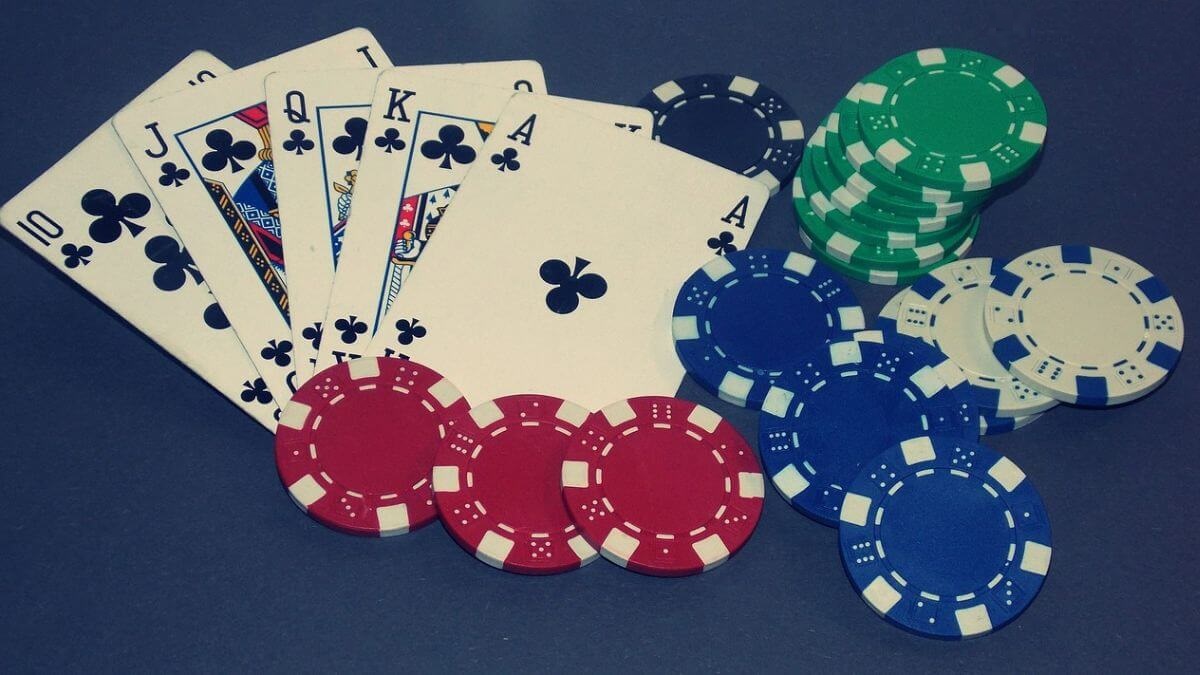 playing cards that have been processed with invisible barcode markings along their edges. These markings are printed using a specialized infrared-reflective ink that is completely invisible to the naked eye under normal lighting conditions. A poker scanner camera or analyzer phone equipped with an IR-sensitive sensor can read these markings instantly, identifying each card’s suit and value within a fraction of a second.
Each card receives a unique barcode pattern — typically 4-8 thin lines printed on one or both of the card’s long edges. The pattern encodes the card’s suit and rank. For example:
- Ace of Spades: Pattern #1 (binary: 0001)
- King of Hearts: Pattern #26 (binary: 11010)
- And so on through all 52 cards, plus jokers if needed
The barcode encoding is standardized — a deck marked for one poker analyzer will work with any compatible scanner, as long as the encoding format matches (most Chinese manufacturers use the same encoding standard).
How Barcode Cards Are Manufactured
The manufacturing process involves several precise steps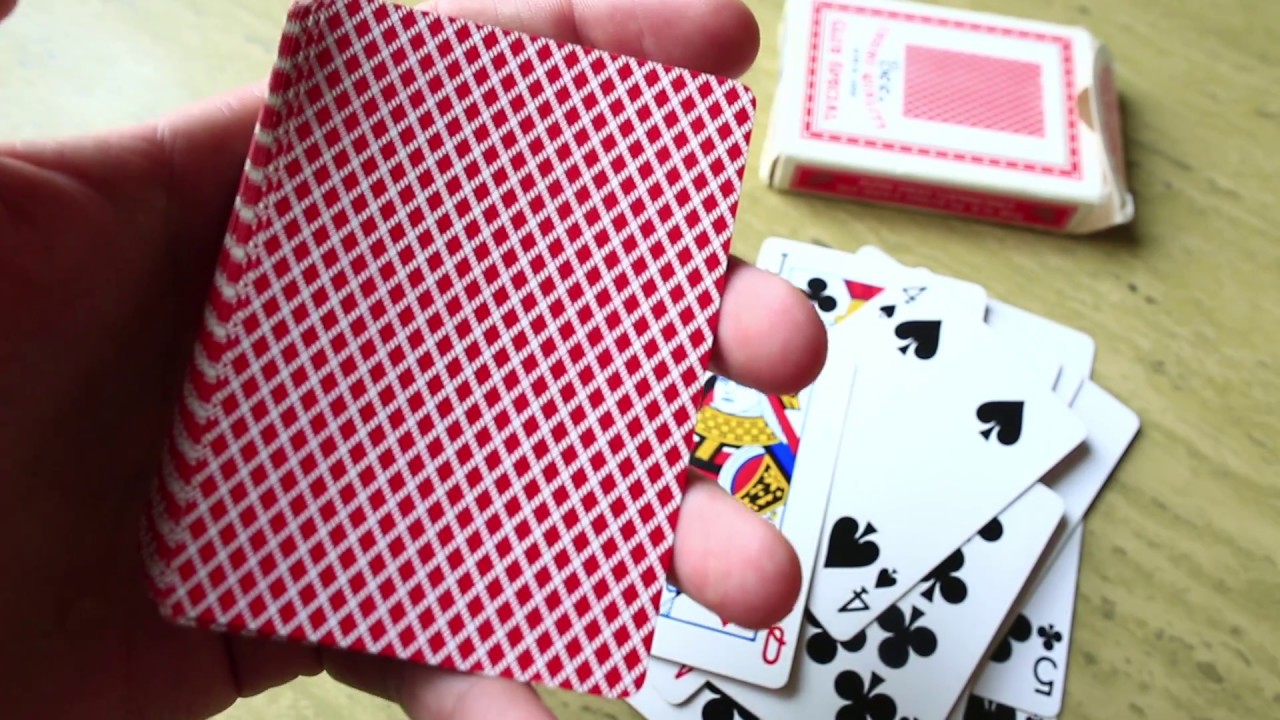 :
:
Step 1: Card Selection — The factory starts with authentic, unmarked playing cards from major brands: Bicycle, Copag, Fournier, Bee, KEM, Modiano, and others. The cards are inspected for any printing defects that could interfere with barcode application.
Step 2: Edge Preparation — The card edges are lightly buffed to create a microscopically smooth surface for ink adhesion. This step is crucial — rough edges cause the barcode ink to spread unevenly, degrading scanner accuracy.
Step 3: Barcode Printing — Using a precision micro-printer, the factory applies the IR-reflective ink in thin, parallel lines along the card edges. Each line is approximately 0.1-0.2 mm wide. The spacing between lines encodes the card’s identity. A typical barcode pattern uses 4-6 lines within a 3-5 mm segment of the edge.
Step 4: Drying and Sealing — The ink is cured under controlled temperature and humidity. A thin transparent sealant is applied to protect the barcode from wear during handling and shuffling. Without this sealant, the barcode would degrade after just 5-10 uses.
Step 5: Quality Control — Each card is scanned by a reference analyzer to verify correct encoding. Cards that fail the scan (wrong suit/value or unreadable barcode) are rejected. The passing rate for a good factory is 98%+.
Step 6: Deck Assembly and Packaging — Cards are assembled into complete decks, verifying that all 52 cards are present and correctly encoded. The deck is repackaged in the original brand box or custom packaging.
Barcode Encoding Systems
There are two main barcode encoding approaches used by different manufacturers:
Linear Barcode System
Each card gets a fixed barcode pattern — always the same lines, always in the same position. The scanner recognizes the pattern by comparing it to a pre-loaded database of card barcodes. This is the simpler, more common system used by most entry-level analyzers.
Pros: Simple to manufacture, widely compatible, fast recognition
Cons: All decks from the same factory use identical patterns — if someone obtains your deck and a compatible scanner, they can read your cards
Dynamic Barcode System
Each deck or batch receives a unique encoding key. The barcode patterns are different from batch to batch. The analyzer must be programmed with the matching key before it can read the cards. This is the more secure system used by professional-grade equipment.
Pros: Security — a stolen deck cannot be read without the matching analyzer key
Cons: Higher cost, requires key programming, less universal compatibility
Compatible Card Brands
Barcode marking can be applied to all major playing card brands, but the results vary by card material:
- Bicycle (paper, air-cushion finish): Excellent barcode adhesion, most common choice. The paper stock absorbs the sealing coat well, producing durable markings that last 25-35 games.
- Copag (PVC plastic): Good adhesion but requires a different ink formulation. The plastic surface is less absorbent, so barcodes may wear slightly faster (20-30 games).
- Bee (casino-grade paper): Similar to Bicycle but with a smoother edge finish that takes barcodes exceptionally well. Lasts 30-40 games — the longest-lasting option for paper cards.
- KEM (cellulose acetate): The most challenging material. Requires a specialized primer before barcode application. Once properly marked, KEM barcodes are very durable (30+ games), but the manufacturing cost is higher.
- Modiano (PVC, Italian stock): Similar to Copag. Italian PVC accepts barcode ink well when properly prepared.
- Fournier (paper, Spanish): Standard paper treatment works well. Similar durability to Bicycle.
Scanner Compatibility and Reading Distance
Barcode marked cards are designed to be read by IR-sensitive camera scanners. The scanner must be calibrated to detect the specific IR wavelength of the barcode ink (typically 850-940 nm in the near-infrared spectrum).
Reading distance depends on the scanner camera’s lens quality and sensor resolution:
- Poker analyzer phone (built-in camera): 20-40 cm — needs to be relatively close to the cards
- External disguised scanner (belt/watch/lighter): 30-80 cm — better range due to specialized lenses
- Table-mounted or ceiling scanner: Up to 150 cm — largest lenses, best sensors, fixed installation
The scanner reads barcodes in real time — as soon as a card is dealt and its edge is visible to the camera, the analyzer identifies it. In a typical Texas Hold’em game, all community cards can be identified within 1-2 seconds of being placed on the table.
Advantages Over Traditional Luminous Ink Marking
Advantages Over Traditional Luminous Ink Marking
Barcode cards: Read automatically by electronic scanner — under 1 second per card, 99.5%+ accuracy, no eyestrain, direct analyzer integration, very low detectability. Downside: camera needs some ambient light to function.
Luminous ink cards: Read manually by human eye via IR lenses/glasses — 2-5 seconds per card, 90-95% accuracy, moderate eyestrain from wearing lenses, indirect (you see markings then input manually), low detectability. Can work in darkness with IR light source.
Maintenance and Card Lifespan
Barcode markings are durable but not permanent. The primary wear factor is edge friction during shuffling and handling. As the sealant wears off, the barcode ink becomes exposed and gradually degrades.
Typical lifespan: 20-35 games per deck, depending on card brand and handling intensity.
Signs that a deck needs replacement:
- Scanner begins missing 1-2 cards per hand (barcode degradation starting)
- Scanner misidentifies cards (sealant worn through, ink spreading)
- Scanned results vary between different scanner angles (uneven wear)
Pro tip: Number your decks and track how many games each has been through. Replace proactively at 25 games rather than waiting for scanning errors to appear during a real game.
For more about related equipment, explore our guide to types of poker cheat cards and learn about buying the CVK 600 poker analyzer for electronic barcode reading.